Traceable production
Each configuration is linked to controlled drawings, component records, inspection points and test documentation from receipt through dispatch.
Explore EEE
Company
Work with us
Made in Africa, engineered for African operating conditions
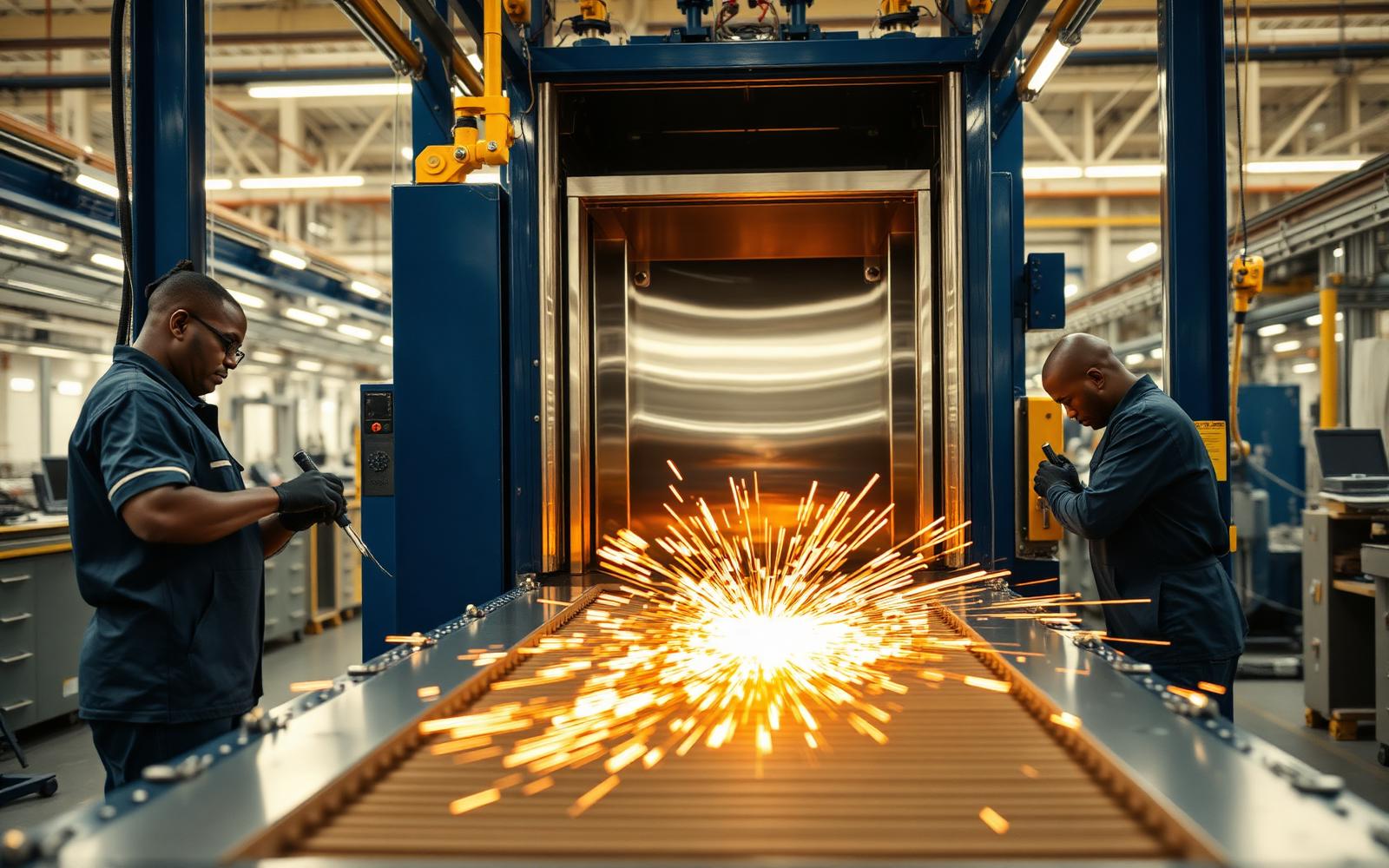
Industrial model
EEE is developing an integrated industrial lift unit with assembly lines, controlled component stores, a full height test shaft, an engineering office and a training centre on one site. This structure supports quality, traceability and scalable regional delivery.
Vertical transport systems
Industrial capability
The EEE model places engineering, assembly, verification, training and spare parts close to the buildings they support. This shortens decision paths and gives clients direct access to the people responsible for configuration and quality.
Each configuration is linked to controlled drawings, component records, inspection points and test documentation from receipt through dispatch.
Managed stocks and local assembly reduce exposure to long international lead times, fragmented logistics and difficult spare part identification.
Modular work areas, practical training rigs and repeatable procedures allow capacity to expand while maintaining process discipline.
Inside the plant
01
Cabin, frame, door and car assembly lines laid out for continuous flow and future expansion.
02
Managed stock of motors, controllers, ropes and safety gear so projects are not exposed to port delays.
03
A planned engineering and training asset for controlled running, adjustment and verification of representative configurations.
04
Engineers producing shaft drawings, traffic studies and configuration files for each project.
05
Classrooms and training rigs for apprentices, installers and client maintenance teams.
06
Packing, regional dispatch and spare-parts distribution across UEMOA and ECOWAS.
Quality system
01
The quality plan calls for traceable safety components supported by the declarations and technical records required for the selected market.
02
Documented inspection points at frame, car, door and control-cabinet stages.
03
Commissioning plans cover brakes, safety devices, levelling, door protection, alarms and functional operation as applicable to the configuration.
04
Each unit ships with its test records, component declarations and maintenance documentation.

Capacity plan
The plant is modular by design: lines are added as demand builds, so capital follows orders rather than forecasts. An initial investment of USD 5 million funds the building, tooling, first stock and training.